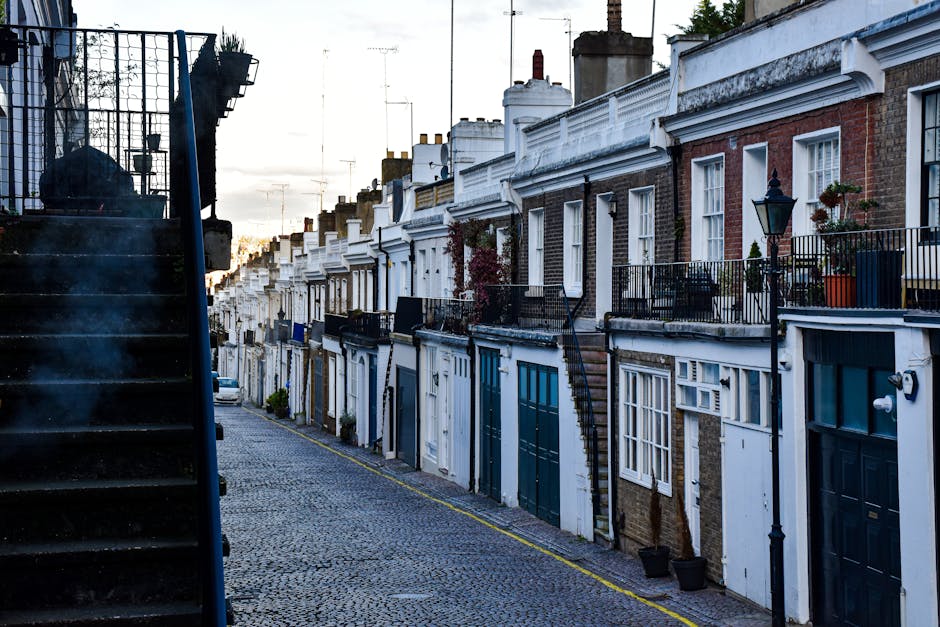
Camden Town removals for narrow streets and stairs

Moving in Camden Town can feel like trying to thread a sofa through a keyhole. The streets are busy, the buildings are often older, and the stairs? Let's just say they can be unforgiving on a heavy box or a tired back. If you are planning Camden Town removals for narrow streets and stairs, the real challenge is rarely the mileage. It is access. It is timing. It is getting furniture out without dents, delays, or a lot of grimacing on the landing.
This guide breaks down how difficult-access removals work in Camden Town, what to expect on the day, and how to prepare so the move runs smoothly. You will find practical advice for flats, maisonettes, basement properties, top-floor walk-ups, and awkward loading spots. There is also a checklist, a comparison table, and a few hard-earned tips that are useful even if you have moved in London before.
- Why Camden Town removals for narrow streets and stairs matters
- How the move works in tight-access streets
- Key benefits and practical advantages
- Who this is for and when it makes sense
- Step-by-step guidance
- Expert tips for better results
- Common mistakes to avoid
- Tools, resources and recommendations
- Law, compliance, standards and best practice
- Options, methods or comparison table
- Case study or real-world example
- Practical checklist
- Conclusion
- Frequently asked questions
Why Camden Town removals for narrow streets and stairs Matters
Camden Town is not a place where you can assume a standard loading bay, a wide driveway, or a handy lift at every property. Many homes and businesses sit on streets that are narrow, busy, or partially restricted by parked cars, cyclists, delivery vans, and the general rhythm of London life. Add in stairwells that turn sharply, low bannisters, tight landings, and old floorboards, and even a modest move can become surprisingly technical.
That is why access planning matters so much. In a difficult-access move, the big risk is not just physical effort. It is time loss, furniture damage, neighbour disruption, and avoidable stress. A move that works well in a suburban cul-de-sac may need a different approach here: smaller vehicles, more careful parking, better packing, and a crew that knows how to handle awkward carries without turning the stairwell into a wrestling match.
In our experience, the best Camden moves are the ones where the access issue is discussed early. Truth be told, a five-minute phone conversation about stairs and street width can save an hour of faffing on moving day. And in a neighbourhood where space is tight, that matters a lot.
If you are still comparing move types, it can help to look at broader services such as removals, flat removals, or man and van support, depending on how much you are moving and how awkward the building access is.
How Camden Town removals for narrow streets and stairs Works
A good difficult-access move starts long before the van arrives. First comes the access assessment. That means looking at the street, the stair configuration, the size of larger items, and whether the vehicle can stop close enough to the property. If the road is tight, the mover may recommend a smaller vehicle or a shuttle approach, where items are carried between the property and a more practical loading point. Not glamorous, but effective.
On moving day, the crew will usually protect floors, corners, and vulnerable furniture before anything starts shifting. Softer items might be brought down first to create space. Larger items such as wardrobes, beds, or desks are often handled later, once the route is clear and everyone can see what they are doing. That simple bit of sequencing makes a huge difference on narrow stairs. Less backtracking, fewer bumps, less noise.
For buildings with especially tight turns, movers may partially dismantle beds, table legs, shelving, or office furniture to make the carry safer. If a sofa or mattress is too awkward to rotate inside the stairwell, a team may use straps, sliders, blankets, and extra hands to keep it controlled. That is where experience really shows. It is not just strength. It is judgement.
When the job involves time pressure, same-day support may be useful, though it is always better to plan ahead where possible. If you need flexibility, a service such as same-day removals can be helpful for last-minute access problems, delayed keys, or sudden schedule changes.
Key Benefits and Practical Advantages
The obvious benefit is that a specialist approach reduces the chance of damage. But there are several other advantages that people tend to notice only after the move is over and they are finally sitting on the floor with a cup of tea.
- Less risk of scuffed walls and railings. Narrow staircases leave very little room for error, so method matters.
- Better time control. A crew that understands access issues can work more efficiently, even when the layout is awkward.
- Safer lifting. Heavy items are easier to manage when the route has been planned and roles are clear.
- Less neighbour friction. Careful loading, quieter handling, and faster turnaround make a real difference in shared buildings.
- Improved packing decisions. The right packing approach can prevent an entire staircase from being blocked by a single oversized box. That happens more than people think.
There is also a practical emotional advantage. When your move is already happening in a busy part of Camden Town, you do not want the access challenge hanging over you. A well-managed move feels calmer. Still a bit chaotic, yes. But manageable. That counts.
If you are moving from a smaller London property, pairing access-aware removals with packing and boxes support or packing and unpacking services can take a lot of pressure off the day.
Who This Is For and When It Makes Sense
This kind of move is not just for people on the top floor of a period conversion, although that is a classic Camden scenario. It also makes sense for anyone dealing with:
- basement or lower-ground flats with tight internal stairs
- maisonettes with split-level layouts
- properties on narrow residential streets with limited kerb access
- shared stairwells in converted houses
- students moving in or out of compact flats
- small offices in older Camden buildings
- any move involving bulky furniture and awkward turns
It also suits people who want to avoid overcommitting to a large vehicle when the street simply will not forgive it. Sometimes a smaller van is the sensible choice. Not the most impressive on paper, perhaps, but the one that actually gets the job done.
For smaller domestic moves, a man with van arrangement can be a practical fit. For more structured home moves, home moves or house removals may be more suitable, especially if there are multiple rooms and heavier items to manage.
Step-by-Step Guidance
Here is a simple way to organise a difficult-access move in Camden Town without losing the plot halfway through.
- Measure the route. Check stair width, landing depth, ceiling height, and any sharp turns. A quick tape measure session is worth it.
- List the awkward items first. Sofas, wardrobes, beds, mirrors, pianos, dining tables, radiators, and large white goods usually need special attention.
- Check street access. Look at where the vehicle can stop, whether parking is feasible, and whether anything blocks the kerb at the likely moving time.
- Decide what needs dismantling. Taking apart bed frames or shelving before moving day can save a lot of time.
- Pack by weight and shape. Use smaller boxes for books, and keep tall, heavy, or fragile items well padded.
- Protect the building. Floor covers, door protectors, and blankets help prevent marks in shared areas.
- Keep the stair route clear. Shoes, bin bags, baskets, and loose cords are exactly the kind of small obstacle that causes a big stumble.
- Confirm timing. In Camden, a slight delay can snowball if parking or road space changes. Leave margin where you can.
One useful trick: walk the path as if you were carrying the largest item yourself. Turn the corners slowly. Look up as well as down. You will spot awkward light fittings, narrow bends, and that one low shelf you forgot about. There is always one.
Expert Tips for Better Results
Tip 1: Photograph the access points. A couple of pictures of the stairwell, entrance, and street frontage can help the crew prepare properly. It is a small thing, but it gives a clearer picture than a rushed description over the phone.
Tip 2: Separate fragile from simply bulky. People often bundle all "big stuff" together, but a heavy bookcase and a glass cabinet are not the same problem. Fragile items need slower handling and more padding, while bulky items may need more hands or partial dismantling.
Tip 3: Avoid overfilled boxes. A box that is too heavy becomes harder to carry on stairs and easier to drop. Books, vinyl, and kitchenware should be split into manageable loads. Your wrists will thank you later.
Tip 4: Reserve stair space for one-way traffic. If possible, avoid having people moving up and down the stairs at the same time. It sounds obvious, but in a busy house people do odd things under pressure.
Tip 5: Use storage if the move is split. If keys are delayed, the new place is not ready, or the access window is tight, short-term storage can stop the day becoming frantic. For that, storage can be a useful buffer.
Tip 6: Be realistic about the van size. A larger van is not automatically better in Camden. If it cannot reach the door or sit safely for loading, it may create more problems than it solves. A smaller, well-planned load can be the smarter choice.
And yes, you may need to live with a little inconvenience. That is just part of older London housing. But inconvenience and chaos are not the same thing. Good planning keeps the second one out.
Common Mistakes to Avoid
The same errors come up again and again in difficult-access moves, and most of them are avoidable.
- Assuming the van can park right outside. In Camden Town, that is often hopeful thinking rather than a plan.
- Forgetting to measure furniture. A sofa that looks fine in the lounge may be impossible to angle around a stair turn.
- Packing boxes too heavy. This is especially common with books and kitchen items.
- Leaving dismantling until the morning of the move. That is how a calm start turns into a scramble.
- Not warning neighbours. Shared hallways and narrow entrances are easier to manage if everyone knows what is happening.
- Underestimating the time needed. Narrow stairs slow things down, full stop.
- Choosing the wrong service type. A simple van hire may be fine for one room, but not if you have several heavy pieces and tricky access.
The biggest one? Not being honest about the awkward bits. If there is a narrow spiral staircase, say so. If the loft ladder is the only way up, mention it. If a mattress must turn in a landing the width of a biscuit tin, well, that too. The more exact the information, the better the plan.
Tools, Resources and Recommendations
You do not need a warehouse full of kit, but a few sensible tools make awkward removals much easier:
- Measuring tape for doorways, stairs, and furniture dimensions
- Furniture blankets to reduce scratches and vibration damage
- Removal straps for controlled lifting on stairs
- Floor runners or covers for shared hallways and landings
- Labels and marker pens so boxes do not become mystery parcels
- Dismantling tools for beds, shelving, and flat-pack furniture
- Strong tape and stretch wrap to stabilise drawers and loose parts
For bigger or more complex jobs, it can also help to compare service styles. A full removals team may suit a family flat move with several bulky items, while removal van support or man with a van may be enough for smaller loads. If you are moving a specialist item, such as a keyboard instrument, piano removals is a better fit than trying to squeeze it into a generic move plan.
Commercial moves are a different beast again. For offices tucked into older Camden premises, office removals or commercial moves may be more suitable because they account for equipment, timing, and business continuity.
Law, Compliance, Standards and Best Practice
For removal work in tight urban spaces, the main compliance concerns are safety, parking awareness, manual handling, and respect for shared property. Exact requirements can vary depending on the street, building, and local arrangements, so it is sensible to treat the following as best-practice guidance rather than a substitute for local checks.
Manual handling: Heavy lifting should be planned, not improvised. Loads should be shared appropriately, and awkward items should be moved with enough people and the right method. This is especially important on stairs where one slip can become a serious problem.
Risk awareness: Narrow staircases, uneven steps, poor lighting, wet floors, and tight corners are all predictable hazards. A good mover treats them as part of the job, not as surprises.
Property care: Shared hallways and stairwells should be protected where practical. That protects both the building and the relationship with neighbours. In real life, that relationship matters. A lot.
Insurance and service terms: It is wise to check what is covered before the move starts, especially for fragile, valuable, or difficult-to-carry items. If you want a clearer overview of how a provider approaches protection and responsibility, pages such as insurance and safety, health and safety policy, and terms and conditions are worth reviewing.
Payment and transparency: Clear pricing, clear scope, and a simple quote process help reduce stress. If you are comparing providers, pricing and quotes is the sensible place to start.
One practical note: compliance is not just about ticking boxes. It is about running a move that does not leave someone bruised, a wall marked, or a landlord unhappy. Basic, yes. But important.
Options, Methods, or Comparison Table
Different Camden Town moves call for different approaches. Here is a simple comparison to help you think it through.
| Method | Best for | Strengths | Limitations |
|---|---|---|---|
| Full removals team | Large flats, family homes, heavy furniture, difficult stair access | More manpower, better coordination, stronger protection for bulky items | Usually more involved than a small move needs |
| Man and van | Smaller moves, a few rooms, quick turnarounds | Flexible, practical, often well suited to tight streets | Less ideal for very heavy or complicated furniture unless planned carefully |
| Removal van only | Load-and-go jobs where access is straightforward enough | Straightforward, efficient, easy to scale for compact moves | Can struggle if there are multiple stair flights or very awkward items |
| Storage plus staged move | Delayed keys, phased renovations, awkward timing | Reduces pressure, gives breathing room | Extra step to organise |
The right option usually depends on three things: how much you own, how awkward the access is, and how much time you have. That is the honest version. Not always thrilling, but it works.
Case Study or Real-World Example
Picture a second-floor flat near Camden Town station. The building has a narrow stairwell, a bend halfway up, and a landing that is just big enough for two people to pass if nobody is carrying anything. The move includes a double bed, a wardrobe, a dining table, six boxes of books, and a sofa that looked reasonable in the living room and hopelessly large on the stairs. Classic.
The solution was simple in theory, a little sweaty in practice. The bed frame was dismantled the day before. The wardrobe doors were removed. Boxes were repacked so none of them became uncarryable bricks. The sofa was moved with two people at the top, two below, and blankets along the wall edges. The van was parked at the nearest workable point rather than the nearest wishful point. The whole thing took longer than a move with lift access would have done, but it stayed controlled and no one had to perform any heroic manoeuvres.
What made the difference was not one single trick. It was lots of little sensible choices. That is usually how difficult-access removals go. Nothing magical. Just good preparation, clear roles, and a calm pace.
Practical Checklist
Use this before moving day. It is short enough to be useful and detailed enough to matter.
- Measure all key furniture items
- Measure stair width, landings, and door frames
- Check whether the van can stop close enough to the property
- Confirm any parking or loading restrictions in advance
- Tell the mover about every awkward item, not just the obvious ones
- Dismantle beds, shelving, and other flat-pack items early
- Pack books and heavy items into smaller boxes
- Protect fragile items with proper wrapping
- Clear hallways, stairs, and door thresholds
- Warn neighbours if shared access may be affected
- Keep keys, paperwork, and contact details easy to reach
- Have a backup plan in case the move runs late
Quick summary: the smoother the access information, the smoother the move. Every time.
Get a free quote today and see how much you can save.
Conclusion
Camden Town removals for narrow streets and stairs are rarely about brute force. They are about reading the space properly, planning for awkward angles, and respecting the fact that old London buildings were not designed around oversized wardrobes. Once you accept that, the rest becomes much more manageable.
Whether you are moving out of a compact flat, shifting office equipment, or just trying to get a sofa down a staircase that feels suspiciously smaller than it did yesterday, the right approach makes all the difference. Plan the access, pack sensibly, choose the right vehicle size, and keep the job realistic. It sounds simple because, at its core, it is.
And once the last box is inside the van and the stairwell is clear again, there is a very nice moment of silence. A bit dusty. A bit tired. But properly done.
Frequently Asked Questions
How do Camden Town removals for narrow streets and stairs usually work?
They usually start with an access check, then a plan for parking, carrying routes, packing, and any dismantling needed. The key is matching the vehicle and crew to the building rather than forcing a standard move into a tight space.
What is the biggest challenge in narrow street removals?
Usually it is not the lifting itself. It is access. If the van cannot stop near enough to the property, or if the stairwell is very tight, the move can take longer and require more careful handling.
Do I need to measure my stairs before booking?
Yes, if the property has tight turns or large furniture. A few measurements can prevent a lot of guesswork and help avoid problems on the day.
Can a man with van service handle stairs in Camden Town?
Yes, often it can for smaller moves, provided the item sizes, weight, and stair access are realistic for the job. It is not ideal for every move, though, especially if you have several heavy items or multiple flights of stairs.
Is a larger van always better for London removals?
No. In a place like Camden Town, a van that is too large can create access issues and parking headaches. A smaller or more flexible vehicle is often the smarter option.
What should I tell the removal team before moving day?
Tell them about stair width, parking restrictions, top-floor access, fragile items, large furniture, narrow corridors, and anything that might slow the move down. The more honest the brief, the better the plan.
How can I protect my walls and bannisters during the move?
Use blankets, floor covers, careful lifting, and slow handling on tight turns. Experienced movers will usually protect vulnerable areas before carrying bulky items through shared spaces.
What if my sofa or wardrobe will not fit down the stairs?
That is when dismantling, alternate angles, or a staged carry may help. If the item truly will not fit, storage or furniture disposal may need to be considered. It is annoying, yes, but better than forcing it and causing damage.
Should I book storage for a Camden move?
Storage can be useful if keys are delayed, the new place is not ready, or the move needs to happen in stages. It adds flexibility and can take pressure off an already awkward access situation.
Are narrow street removals more expensive?
They can be, depending on the amount of labour, the time needed, and the access complexity. The exact price varies by job, so a clear quote is the best way to understand the likely cost.
How far in advance should I book a difficult-access move?
As early as you can, especially if you are moving in a busy part of Camden or need a specific time slot. More notice usually means better planning and less last-minute stress.
What is the safest way to move heavy furniture down stairs?
Use the right number of people, keep the route clear, lift slowly, and use protective materials where needed. If a piece is especially awkward, partial dismantling can make it much safer and easier to handle.
Can same-day removals work for a Camden flat with stairs?
Yes, sometimes they can, especially for smaller moves or urgent changes. But with tight access, it is still better to allow proper planning if there is any chance at all.
What should I do on moving day if parking becomes a problem?
Stay calm and speak to the mover straight away. Often there is still a workable solution, even if it means a slightly different loading point or a short carry from the van. Camden moves rarely go exactly as drawn on paper. That is just life.